

10 Years Since the Paris Agreement
December 12 marked the 10th anniversary of the Paris Agreement, which was adopted in 2015 at the 21st Conference of Parties (COP21) in Paris, France. The Paris Agreement is the legally binding United Nations treaty to limit global warming to well below 1.5℃ above pre-industrial levels, or what the global average temperature was hovering around just before the 1850s. 1.5℃ was selected because it is a critical threshold to prevent severe, irreversible damage to our global climate system.
The 195 parties involved have voluntarily committed to “carbon neutrality” by 2050 or 2070, or in other words, committed to moving numbers around on paper rather than keeping sources in the ground or aspiring towards REAL zero emissions. This idea behind carbon neutrality has led to significant greenwashing, and false solutions that hinder genuine climate action at the local, national and global levels. Carbon neutrality and 'net zero' is a dangerous distraction at a time when we need a complete phaseout of fossil fuels, and to stop capitalizing on false solutions in Indigenous territories and colonizing the peoples who are already safeguarding our global climate system.
Major Emitters and Accountability
Major emitters like the United States have formally withdrawn from the Paris Agreement (again), to join the ranks of Iran, Libya, and Yemen as the only countries in the world who have not ratified this climate treaty. While a few countries have not signed on, there is ultimately no financial or legal penalties for countries failing to meet their self-set emission targets, or what the UNFCCC refers to as “nationally determined contributions, or NDCs.” For instance, Israel ratified this agreement but has continued to emit greenhouse gas emissions equivalent to the 100 most climate vulnerable countries COMBINED through its ongoing genocide in occupied Palestine… two years in a row now with no end in sight.
COP30 Under the Shadow of Fossil Fuels
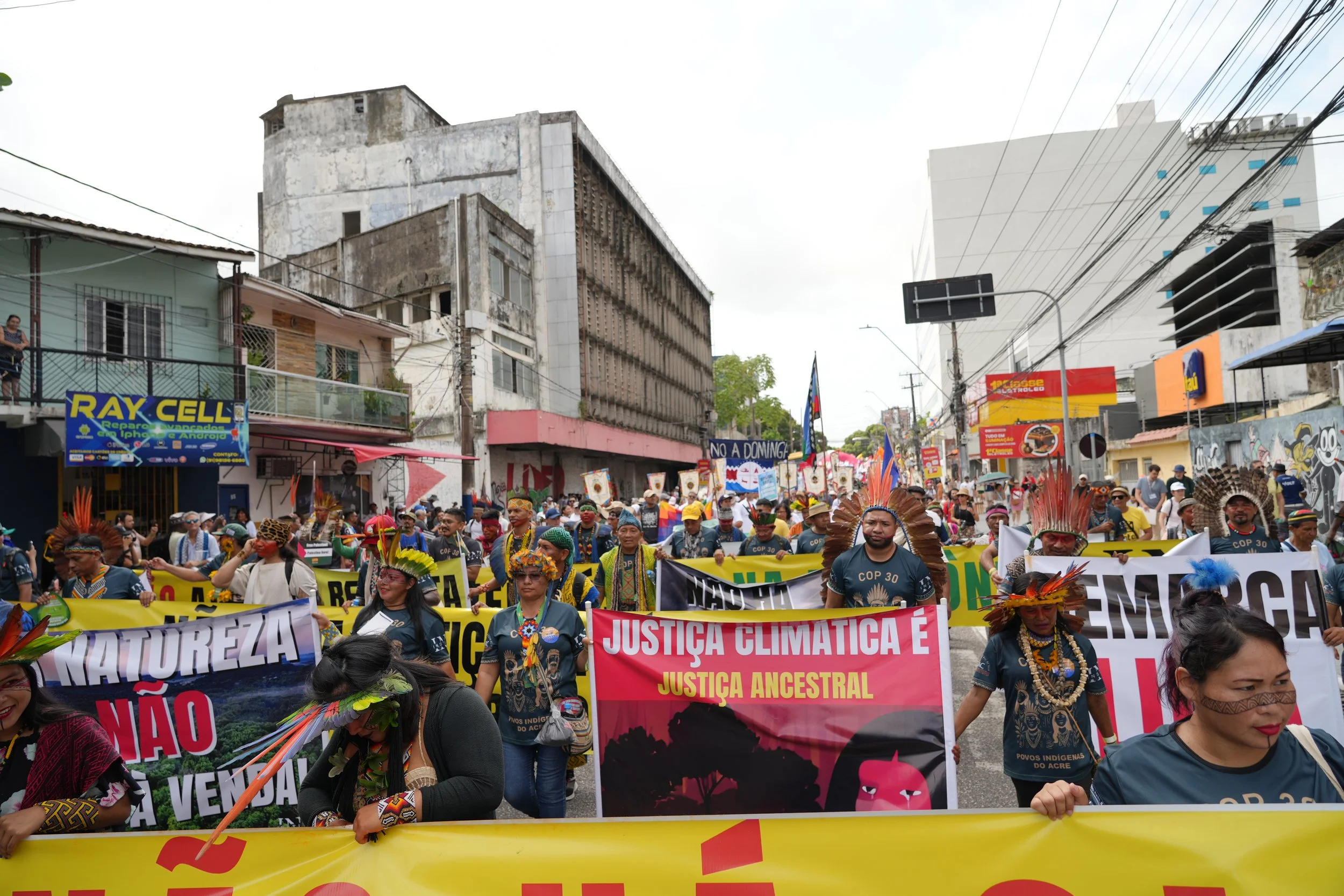
Fast forward 10 years, and where do we find ourselves in relation to the 1.5℃ necessary for a sustainable climate future?
If this is any indication of where we are headed, the last few COPs have been held in major oil and gas countries: COP28 was held in Dubai, UAE, which is a major global oil exporter. COP29 was hosted in Baku, Azerbaijan, the first country in the world to have industrial oil extraction. Unfortunately but not surprisingly, COP30 was no exception, as Brazil is home to the highest oil and gas production in South America. With over 1600 fossil fuel lobbyists in attendance this year, if this was a delegation, it would outnumber every state and civil society delegation except Brazil.
When colonial states like Canada platform oil and gas executives in their pavilions at COP30, the Conference of Parties seems to protect corporate interests, and heavily relies on the militarization of the venue to do so. As COP30 went on, attendees were greeted by increasing numbers of tanks and soldiers with assault rifles. Why are there tanks at a climate gathering?
When militaries are among the highest consumers of fossil fuels in the world, it is quite curious that the UNFCCC does not actually require any states to report on their military emissions: we only see voluntary disclosure by a handful of states. If we have any shot at 1.5℃, platforms and tools like the Military Emissions Gap will be essential in getting us there. De-militarization is absolutely essential in curbing emissions, and that can only happen with a Free Palestine.
This was also called the “Indigenous COP,” but this could not have been further from the truth. When you have to be associated with a colonial state or an organization that is accredited with the United Nations, the Conference of Parties is not a space designed for sovereign Indigenous people to attend. What we really saw was the use of our images and cultures as a marketing tool rather than a platform for meaningful participation.
When 1 in 25 attendees of this climate gathering are fossil fuel lobbyists and outnumber Indigenous delegates by nearly 50%, this is not the “COP of truth.” Despite overwhelming support for a fossil fuel phaseout, with over 80 countries signing on to build a “roadmap for decarbonization,” the final texts of COP30 did not reflect this despite the overwhelming science and demands of the people. While Canada was missing in action, we uplift Colombia for announcing the first ever conference on the phaseout of fossil fuels, taking place in April 2026.
Reflection and Solidarity
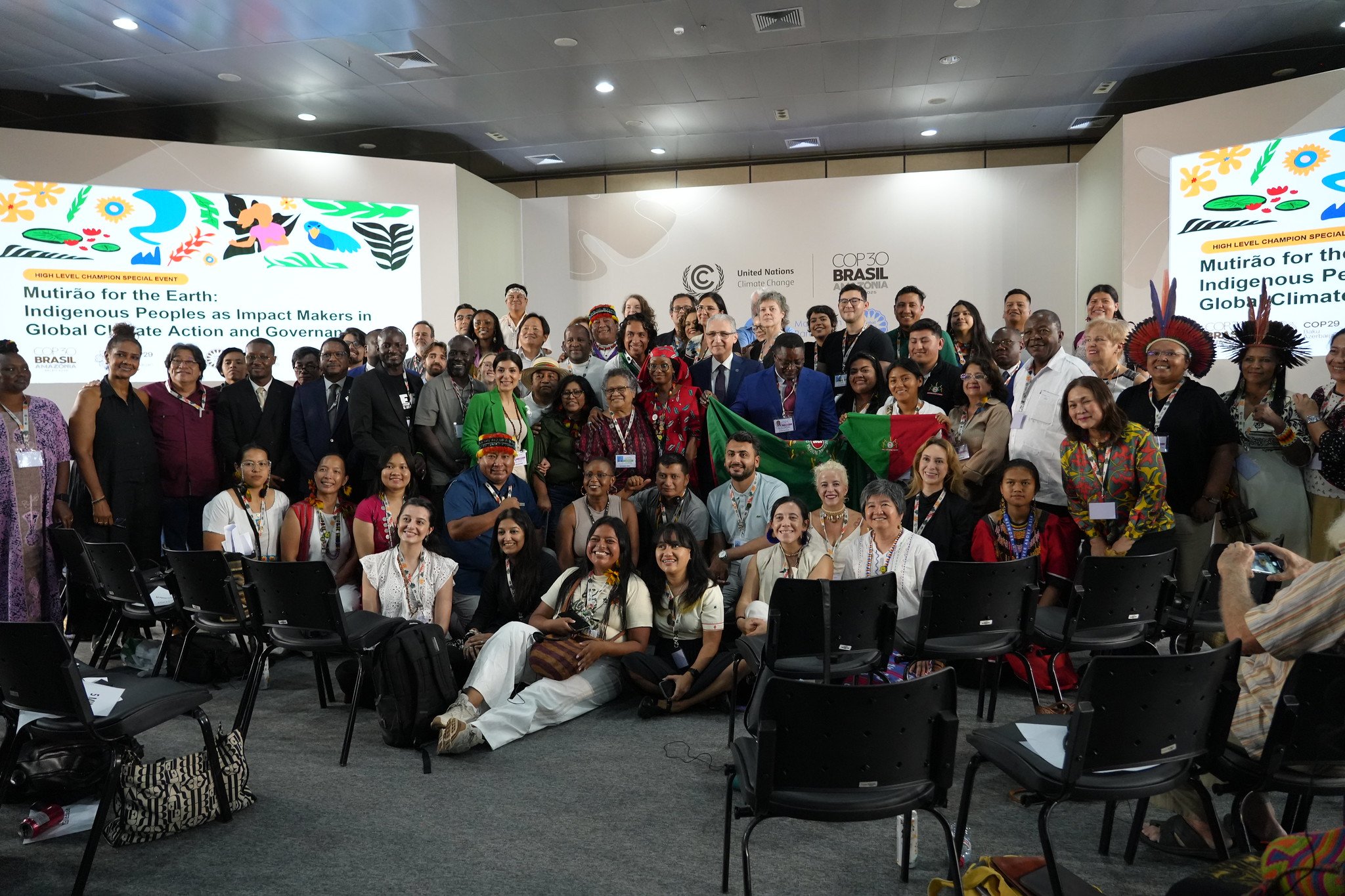
COP30 was heartbreaking and hopeful, concerning yet connective, enraging and everything else in-between. While the final negotiation texts were watered down after fires and floods, we stand in solidarity with the Indigenous people who resisted and made history both inside and outside the venue.
The UNFCCC will not save us. Governments will not save us. Our power will always be with the people.
About the Author
willo prince (they/them) is Dakelh Dene from Nak’azdli in Northern british columbia, and currently working with Indigenous Climate Action as the campaigns manager.
