Indigenous Peoples did not fight for generations to be branded as stakeholders. The routine conflation of “Indigenous Peoples and local communities” in climate and environmental policy risks doing exactly that.
Unlike Indigenous Peoples, “local communities” have neither a universally agreed definition nor a distinct, internationally recognized framework of collective rights. The term can include groups whose interests conflict with Indigenous rights and title. Treating the two as interchangeable blurs whose authority must be respected and whose consent must be sought. It also harms local communities by obscuring their particular needs and priorities, making it easier for institutions to claim inclusion without establishing meaningful processes for their participation.
Indigenous Peoples and local communities can stand together against extractive industries, environmental destruction and climate injustice. Strong alliances make room for differences in rights, responsibilities and authority, including when interests diverge. Solidarity requires relationships built through trust, accountability and respect for self-determination.
Institutions must stop treating blurred distinctions as evidence of progress. If inclusion requires Indigenous Peoples to surrender our distinct status and rights, whose interests does it serve?
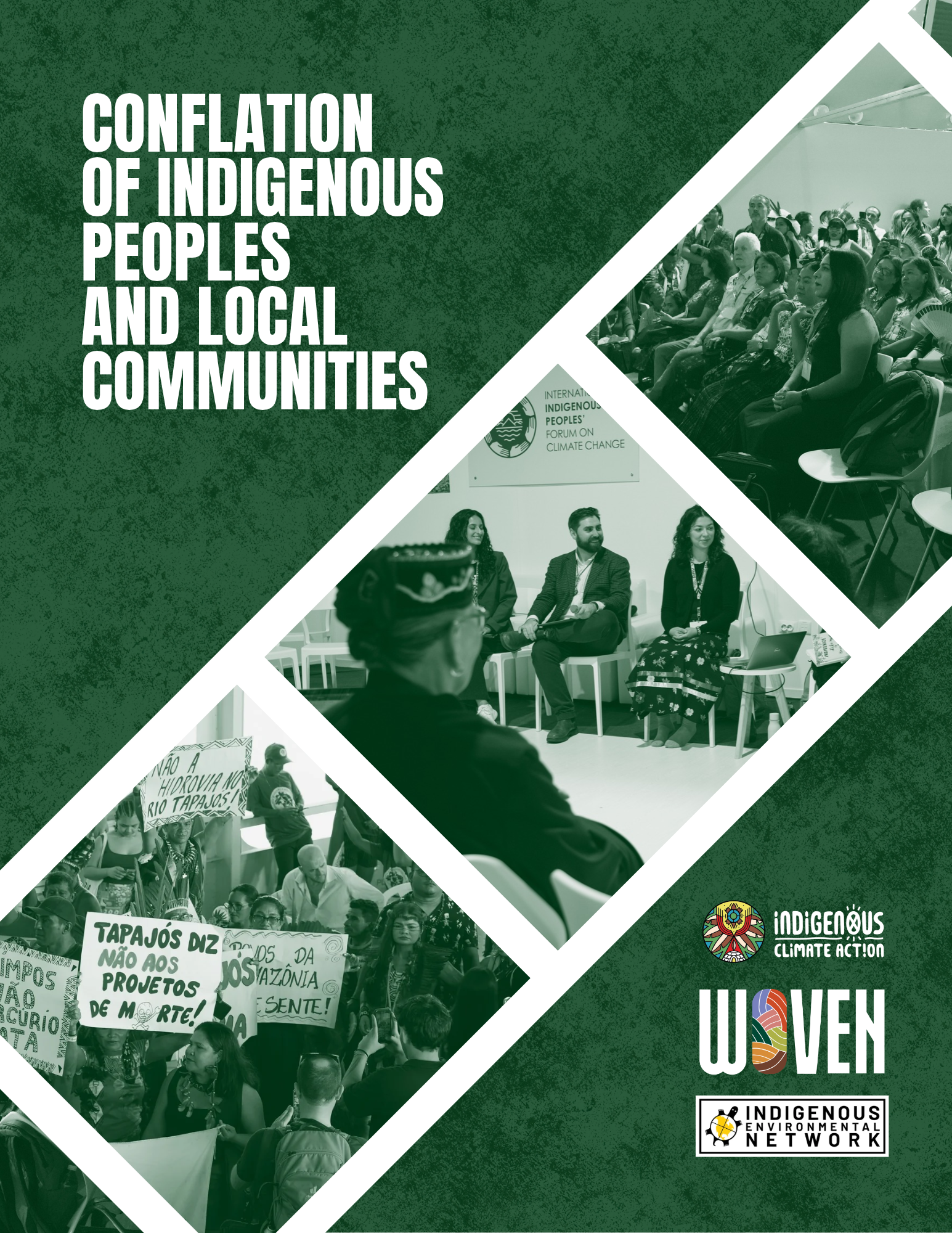
Learn more by reading our report launched in partnership with Woven and the Indigenous Environmental Network (IEN) during COP31.
Conflation of Indigenous Peoples and Local Communities, November 2026